
Field Notes from Haiti Part II
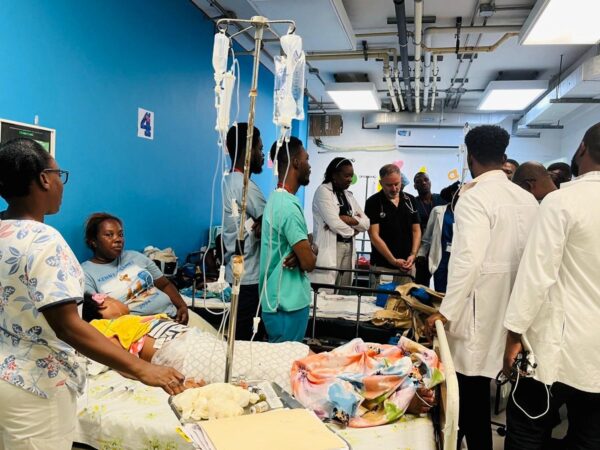
Konbit Sante board member and pediatrician Dr. Adam Silverman recently returned from a trip to Haiti. He visited Justinien University Hospital (JUH) to reconnect with colleagues, observe the renovated pediatric ward, and assess how Konbit Sante can best strengthen pediatric care in northern Haiti.
Leadership on the Ward
 Adam spent time rounding with Dr. Muscadin, JUH’s Attending Faculty Pediatrician. Her role is enormous: supervising dozens of learners, managing a high-volume service, and doing it all while working only part-time hours at the hospital.
Her teaching style is decisive yet encouraging, grounded in respect and responsibility. Adam described her as “a true servant leader”. Her request for his next trip is clear: a structured training program to help staff respond more effectively to critically ill children.
Adam and Country Director, Tezita Negussie, are now planning an ETAT (Emergency Triage, Assessment, and Treatment) course for nurses and residents—a proven WHO framework that strengthens rapid response for acutely ill pediatric patients.
A Ward Transformed—and a Team Rising With It
Since Dr. Silverman’s last visit, the pediatric ward has visibly changed: bright rooms, colorful murals, proper seating, and a general sense of warmth and order. But what stood out most wasn’t the infrastructure—it was the people.
“The senior residents are deeply invested in improving pediatric care not just in the hospital, but across the north,” Adam reflected. “They’re trying to build something despite every obstacle.”
They’re skilled, motivated, and eager to serve. Yet without available salaried positions, many face the prospect of completing their residencies with no income and no role—an enormous loss to Haitian healthcare.
In this context, Konbit Sante’s steady presence matters. Adam described us as the organization residents trust when they need guidance, advocacy, or simply someone to back their ideas.
Ingenuity in a System Without Enough
Resource limitations mean the clinical team must improvise. Adam documented several examples—creative, practical, and sometimes troubling because they underline how thin the margins are.
- Oxygen access: Without adequate regulators or tubing, clinicians devised a way to split oxygen flow to two newborns using stethoscope tubing. Ingenious, yes—but ultimately unregulated and inadequate.
- Space constraints: With too few beds, babies are sometimes placed two to a crib or laid on tables.
- Basic identification: Without infant ID bracelets, staff improvise with medical tape.
 Two infants sharing a single bed in the JUH pediatric ward due to limited space.
These workarounds are snapshots of the reality clinicians face daily. They also point directly to the kinds of modest, high-impact support that donors make possible—items that are routine in U.S. hospitals but transformative in Cap-Haitien.
Why This Matters Now
The pediatric service at JUH is now viewed as a model of academic medicine in northern Haiti. Not perfect. Not fully resourced. But transformed—and continuing to evolve—because of sustained partnership.
As Adam put it:
“Within the hospital, pediatrics is what everyone points to as the example of what’s possible.”
That progress didn’t happen by accident. It happened because donors like you chose to stay committed to Cap-Haitien year after year, even when headlines made Haiti feel distant, inaccessible or, to some, irredeemable.
A Note for Our Annual Campaign
We are in the final weeks of our annual campaign, and this work depends directly on the generosity of our community. Each gift—large or small—helps ensure that JUH’s pediatric service continues to advance and it helps Konbit Sante remain the constant partner our colleagues count on. If you are able, please consider making a year-end gift to sustain this momentum.
Previous
March 12, 2026
How Care Continues When the Power Goes Out
March 2, 2026
Powering Care Starts Today!
February 16, 2026
Celebrating New Leaders and Lasting Service
January 19, 2026
Our 2025 Annual Report is here!
December 29, 2025
Caution! This smile may cause spontaneous generosity!
December 17, 2025
Field Notes from Haiti Part II
December 1, 2025
Field Notes from Haiti
November 17, 2025
One Tiny Life. One Chance.
September 8, 2025
Leave a Legacy of Health & Hope
August 18, 2025
A Crown Jewel for Haiti’s Children
July 30, 2025
Just 24 Hours to Give
July 9, 2025
60% to $60,000!
June 2, 2025
Konbit Sante’s 16th Annual Summer Campaign
May 15, 2025
A Fragile Stability: Updates from Cap-Haitien
April 16, 2025
Become a Konbit Keeper
April 8, 2025
In Memoriam: Jacques Louis
March 21, 2025
SPOILER ALERT: Nurses Save Lives!
February 27, 2025
Support Life-Saving Around-the-Clock Pediatric Nursing Care
February 18, 2025
Konbit Sante Makes the Case for USAID Funding
February 7, 2025
What happens when USAID disappears? Women and children suffer.
January 23, 2025
Konbit Sante Launches Expanded Neonatal Care Training
December 30, 2024
Two Days to Go!
December 24, 2024
Yon gwo mèsi (a huge thank you)
December 3, 2024
In Memoriam: Steve Larned, MD
November 27, 2024
Update from Cap-Haitien: Focus on Pediatrics
November 27, 2024
Konbit Sante Earns Four-Star Rating on Charity Navigator
November 18, 2024
Make a Difference Today!
November 8, 2024
In the Face of Change, Stand with Haiti.
September 20, 2024
Six Shipments Depart for Cap-Haitien
August 13, 2024
Taking a Million Steps for Haiti!
July 31, 2024
A Big Thank You to 80 for Haiti – Team Traverse!
July 25, 2024
Nate and Nan Paddle 30 Miles!
July 18, 2024
Walkabout-Falmouth and Team Atlanta-Okap
July 11, 2024
The Haiti Staff Team Hikes to the Citadel
June 21, 2024
In Memorium: Donald E. Nicoll
June 20, 2024
Three Summer Haitian Art Sales Are Coming Up!
June 13, 2024
Haiti Staff to Hike to the Citadel!
June 3, 2024
Please Join the Movement! June 1 – July 31, 2024
April 30, 2024
Konbit Sante-Supported Nurses Begin Work
March 28, 2024
Dr. Muscadin “most compassionate”
March 18, 2024
NPR interview with Dr. Youseline Telemaque
March 14, 2024
We have a match!
March 7, 2024
Please Give the Gift of Pediatric Care
February 29, 2024
Strengthening Pediatric Nursing at Justinien University Hospital
February 23, 2024
Welcome Emanise Muscadin, MD
January 8, 2024
Thank You!
December 27, 2023
Providing Essential Medicines, Supplies, and Equipment
December 15, 2023
Now On YouTube: 22 Years In Haiti Through Thick And Thin
December 14, 2023
Konbit Sante’s 2023 Annual Report: Now Available
December 11, 2023
Be Part of the Solution
December 1, 2023
22 Years in Haiti: Through Thick and Thin
November 8, 2023
Konbit Sante Welcomes Perry Newman as Executive Director
October 12, 2023
Meet Dr. Maudelin Mesadieu
October 10, 2023
Konbit Sante Ships 24th Container from Maine to Haiti
September 9, 2023
Two Invitations and a Great T-Shirt
September 5, 2023
Konbit Sante Seeks Full-Time Executive Director
August 30, 2023
Good Things Happening in Haiti
August 9, 2023
Thank you!
August 3, 2023
The ULS Story
July 20, 2023
Nate and Nan paddle 23 miles!
July 6, 2023
It’s halftime!
June 29, 2023
Konbit Sante Responds to New Cholera Outbreak
June 2, 2023
Join the Movement
May 11, 2023
Watch: The Power of Collaboration
April 28, 2023
Just out: The 2022 Annual Report
April 13, 2023
Konbit Sante Presents: The Power of Collaboration
April 4, 2023
Caring for Children Whose Parents Can’t Pay
March 28, 2023
Just $5,000 to go to meet our match
March 18, 2023
Why We Support Pediatrics at Justinien Hospital
March 11, 2023
Samuel’s Story
February 4, 2023
News from Cap-Haitien, Haiti
January 29, 2023
Haitian Art Exhibits at Coffee By Design
January 18, 2023
Konbit Sante Welcomes Marcella Felde to the Maine Office
December 28, 2022
What’s On Our 2023 To-Do List?
November 20, 2022
Konbit Sante Announces New Officers and Interim Executive Director
November 18, 2022
Cholera Resurgence in Haiti
April 17, 2022
Tools to the Professionals!
April 1, 2022
Director’s Blog: A Moment to Reflect and Look Ahead
March 6, 2022
Volunteer Spotlight: Dr. Gerard Tiffault
February 27, 2022
Champion for Change: Dr. Nelly Osias
February 13, 2022
Experienced Health Professionals Form the Program Advisory Committee
February 6, 2022
Join Our Team as a Volunteer Grant Writer
February 1, 2022
Director’s blog: Bon Chans ak Mesi Anpil
January 31, 2022
Volunteer Spotlight: Dr. Victor Herson
January 15, 2022
Vitamin A distribution to Children in Cap-Haitien
January 6, 2022
Director’s Blog: Bonne Annee! Happy New Year!
December 27, 2021
Annual Report 2021
December 25, 2021
Merry Christmas!
December 22, 2021
Director’s Blog: Thank You and Happy Holidays
December 16, 2021
Support for Fuel Explosion in the Communities of Cap-Haitien
December 6, 2021
Champion for Change: Emile Eustache
December 2, 2021
Upcoming Concert
November 30, 2021
Today is Giving Tuesday!
November 29, 2021
Director’s Blog: Reflections as we look ahead to a new fiscal year
November 25, 2021
Happy Thanksgiving
November 11, 2021
Volunteer Spotlight: Steve Connolly
October 31, 2021
Director’s Blog: Living in Unprecedented Times
October 28, 2021
Champion for Change: Odelin Pierre
October 18, 2021
English Conversation Volunteer Needed!
October 1, 2021
Make Births Safe for Women
October 1, 2021
Internship Profile: Alice Cockerham
October 1, 2021
Ultrasound Training Program
September 30, 2021
Volunteer Spotlight: Shilpa Atnoor
September 27, 2021
Director’s Blog: So long and farewell, with gratitude
September 20, 2021
Champion for Change: Dr. Maklin Eugéne
September 6, 2021
Thank you to our donors, sponsors, and supporters!
September 3, 2021
Come Join Us in the Garden of Earth & Soul 9/16
August 31, 2021
Director’s Blog: Kembe Fem Ayiti Cherie
August 28, 2021
Volunteer Spotlight: Richard Lemiuex
August 28, 2021
Champion for Change: Augustin Jesula
August 23, 2021
Earthquake Update
August 23, 2021
Meet Our Partner, The Dalton Foundation
August 15, 2021
Earthquake Support for Haiti
August 9, 2021
We are so close to the finish line!
July 30, 2021
Director’s Blog: Let’s stand by Haiti at this time
July 26, 2021
We Walk With Haiti Wraps Up This Week
July 20, 2021
Champion for Change: Saminetha Joseph
July 20, 2021
Join our team at Konbit Sante
July 15, 2021
Volunteer Spotlight: Erica Felker-Kantor
July 15, 2021
Current Haiti Updates
July 2, 2021
We Walk With Haiti 2021
June 28, 2021
Volunteer Spotlight: David LaQuerre
June 24, 2021
Champion for Change: Paul Toussaint
June 16, 2021
Happy Father’s Day!
June 1, 2021
Join the We Walk with Haiti fundraiser
May 29, 2021
Champion for Change: Maudelin Mesadieu
May 28, 2021
Volunteer Spotlight: Nan Nickerson
May 26, 2021
June 2 webinar: “Celebrating Cap-Haitien, Haiti”
May 17, 2021
Join us May 22 for a metal art fundraiser
May 13, 2021
Save the Date: June 2 Zoom Webinar
April 30, 2021
Champion for Change: Rony Saint Fleur
April 26, 2021
Director’s Blog: Learning everyday lessons in leadership
April 21, 2021
Volunteer Spotlight: Polly Larned
April 14, 2021
Partnerships saving lives in Haiti
March 31, 2021
Champion for Change: Clotilde Josaime St Jean
March 26, 2021
Volunteer Spotlight: Mike Kilmartin
March 19, 2021
Giving children a fighting chance
March 17, 2021
In Memoriam: Michael John Ryan
March 16, 2021
Restaurant fundraiser raises money and awareness
February 26, 2021
Director’s Blog: Finding solutions for continuity of care
February 26, 2021
Champion for Change: Dominique Joseph
February 24, 2021
Donation provides portable ultrasound diagnostics
February 22, 2021
Konbit Sante consigns wheelchairs for HCBH
February 16, 2021
Volunteer Spotlight: Tracey Proulx
February 9, 2021
Fundraiser looks through a ‘radical’ lens
February 8, 2021
Konbit Sante awarded GuideStar Silver Seal of Transparency
January 29, 2021
Champion for Change: Ketlie Deslandes
January 27, 2021
Q&A with board President Kate Healy
January 15, 2021
Honorary advisors provide invaluable guidance
January 7, 2021
Volunteer Spotlight: Nancy Sohler
January 1, 2021
Happy New Year from Konbit Sante
December 29, 2020
There is still time to make a difference
December 23, 2020
Director’s Blog: Giving the gift of hope this holiday season
December 18, 2020
Double your impact by donating today
December 16, 2020
Champion for Change: Ruddy Adeca
December 3, 2020
Volunteer Spotlight: Deb Patten
December 2, 2020
Solar installation helps Konbit Sante’s work
November 30, 2020
Director’s Blog: Challenging the status quo
November 29, 2020
Champion for Change: Melick Derius
November 24, 2020
Former Executive Director Nate Nickerson Honored
November 16, 2020
NOMAD donates almost 50,000 masks to Konbit Sante
November 13, 2020
Kangaroo Care helps give newborns head start
November 2, 2020
A message from new Executive Director Rupal Shah
October 23, 2020
Director’s Blog: Transitions, Gratitude, and Looking Ahead
October 19, 2020
Okap Cheri funds put to good use at Justinien Hospital
September 30, 2020
View Virtual Chat with Konbit Sante Leaders
August 28, 2020
Okap Cheri fundraiser extended to October
August 14, 2020
Okap Cheri raising funds for Konbit Sante
July 22, 2020
Remembering Charlie Stevens
June 23, 2020
Community education key to COVID-19 response
June 16, 2020
We Walk with Haiti goal increased to $50K
June 15, 2020
Rory & Mia Walk with Haiti
June 10, 2020
Lynch Family Walks with Haiti
June 8, 2020
Black Lives Matter
June 5, 2020
Randall May Walks with Haiti
June 2, 2020
Nate Nickerson Canoes for We Walk with Haiti
May 18, 2020
Together, we are making a difference
April 24, 2020
COVID-19 response accelerates in Haiti
April 6, 2020
Champion for Change: Dr. Hans-Michel Pierrot
April 2, 2020
More cases of COVID-19 confirmed in Haiti
February 26, 2020
Konbit Sante featured on Maine Public Radio
February 3, 2020
New Konbit Sante article in Portland Press Herald
January 17, 2020
In Remembrance: 10th anniversary of Haiti earthquake
January 8, 2020
Matching Funds Campaign Extended
January 8, 2020
Q&A with Assistant Director Randy May
December 17, 2019
Matching Funds Campaign Extended to Dec. 31
December 3, 2019
Give to Konbit Sante and have your gift matched
November 7, 2019
‘These are the very times that we need to step up’
October 30, 2019
Donations saving babies during Haiti crisis
October 24, 2019
Konbit Sante featured in DownEast magazine
October 17, 2019
Flatbread Co. fundraiser for Konbit Sante set for Oct. 22
October 8, 2019
Working from a posture of hope
September 26, 2019
O2 donations saving lives at Justinien University Hospital
August 30, 2019
2019 Summer Newsletter Now Available Online
August 9, 2019
New volunteer opportunities available in Haiti and U.S.
August 7, 2019
4 new members named to Board of Directors
July 22, 2019
Why Konbit?
June 27, 2019
Compete for Konbit!
June 21, 2019
New class graduates from Mothers Club
April 25, 2019
Equipment donations needed
April 9, 2019
New ULS Clinic Opens in Bande du Nord
March 8, 2019
Now is the Time to Steel Our Resolve
February 1, 2019
Konbit Sante Program Manager a Champion for Change in Haiti
January 22, 2019
Research Program Helping to Build a Healthier Haiti
January 14, 2019
9 Years Later: Remembering Victims of 2010 Earthquake
December 18, 2018
Konbit Sante Donors Help Young Mother and Her Baby Survive
November 3, 2018
Volunteers Strengthen Healthcare Infrastructure in Haiti




not-for-profit corporation organized in the state of Maine.